One signature over the exact file.
A whole-file RSA-PSS seal covers the finalized MP4 and its bounded metadata, so any later change to the exported evidence is detectable.

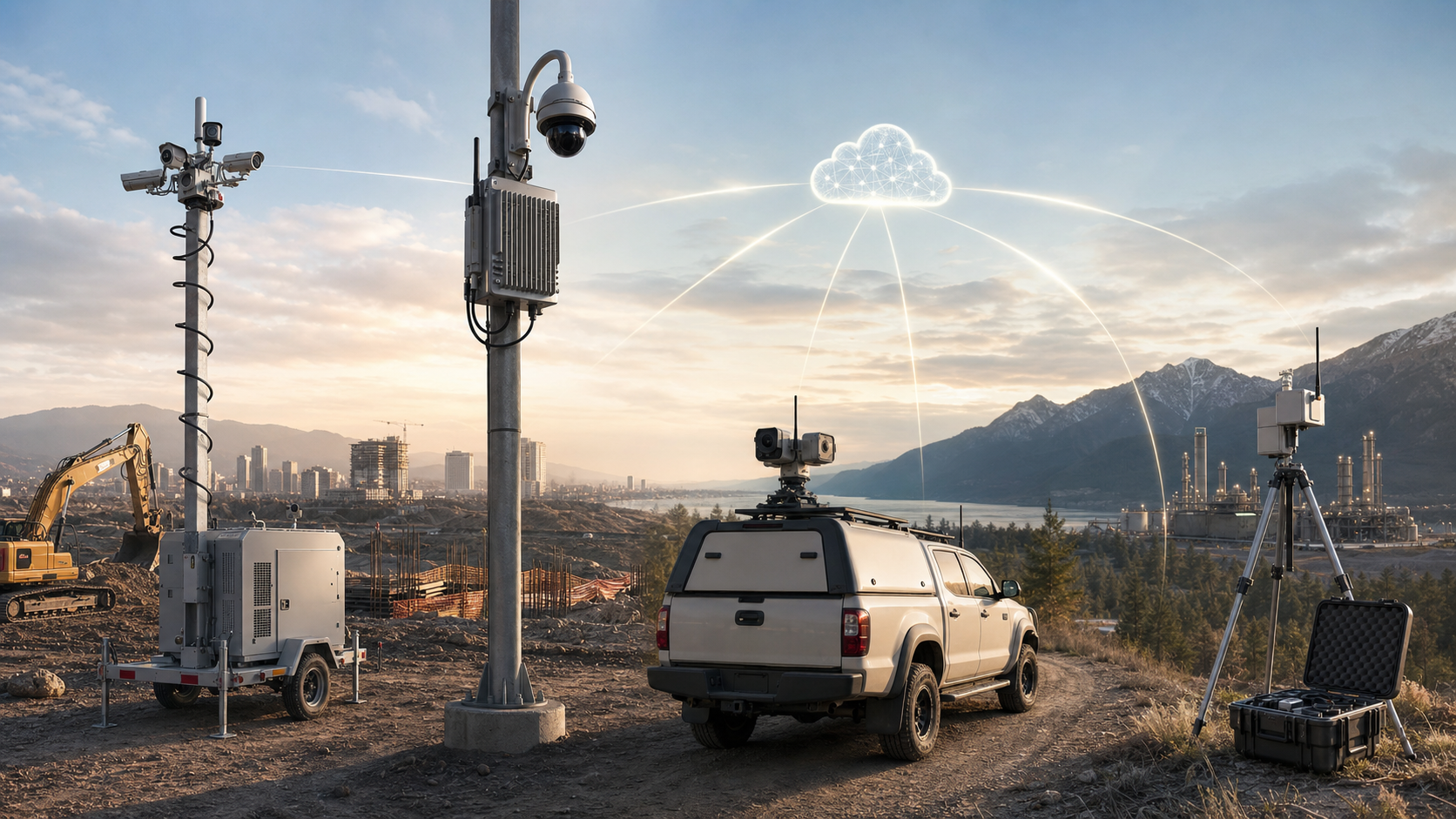
Autonomous field intelligence
SurveillX unifies edge video, AI events, weather, GPS, sensors, power, and connectivity into one resilient operational record—so teams can see what happened, understand why, and act from anywhere.
New — sealed evidence export
Tamper-evident from the trailer, at export. This seals the exported file’s integrity and origin—it is not a certified legal chain of custody, and it does not by itself prove the source media came from the camera.
Continuum can now export a recorded clip as a sealed evidence file in the open ONVIF Export File Format (OEFF)—bounded metadata derived from the exact finalized video, a whole-file RSA-PSS seal, and a dedicated per-trailer exporter identity. Any standards-based ONVIF reader can verify it, not just SurveillX tooling.
Why OEFF: it’s the open, MP4-based export format that NIST—at the FBI’s request—recommended as the FBI’s minimum interoperability requirement for sharing surveillance video (NISTIR 8161r1), and that IEC standardized internationally (IEC 62676-2-32). Purpose-built for law-enforcement video interoperability—not a proprietary lock-in.
A whole-file RSA-PSS seal covers the finalized MP4 and its bounded metadata, so any later change to the exported evidence is detectable.
Each node seals with its own authorized exporter certificate, traceable to the SurveillX issuer—so a file’s origin is attributable, not anonymous.
The artifact reads and validates in an independent, standards-based ONVIF reader. Recipients confirm the seal themselves—no SurveillX login required.
Deployed to fit the site
Every deployment runs the same software and produces the same operational record.
Towable units with solar, battery, and cellular for sites with no infrastructure at all.
Pole-, wall-, or building-mounted nodes on site power and network for long-lived locations.
Low-cost edge units that bring the same recording and detection to smaller footprints.
Sensor-only satellites and weather stations that report into a nearby hub node.
One field operating layer
Designed for temporary, remote, and infrastructure-light locations where bandwidth, power, and access are never guaranteed. Works with the cameras you already have—ONVIF plus major vendor integrations.
On-device recording, health monitoring, gap detection, adaptive retention, and automatic stream recovery keep the field visible when links are not.
Video events sit beside GPS, light phase, weather, LoRaWAN sensors, battery state, cellular health, and system telemetry—not in separate silos.
Indexed timelines, recording-day calendars, snapshots, protected segments, event thumbnails, and bounded clip exports turn hours of footage into reviewable evidence.
Local-first operation with optional Azure or S3-compatible backup, signed sharing, webhooks, alarm paths, and bandwidth-aware cloud delivery.
Inspect storage, thermals, battery, network, services, camera clocks, deployments, and recording coverage across distributed edge nodes.
Trigger signed webhooks, central-station alarms, talk-down audio, GPIO relays, scheduled tasks, PTZ actions, and guided fleet remediation.
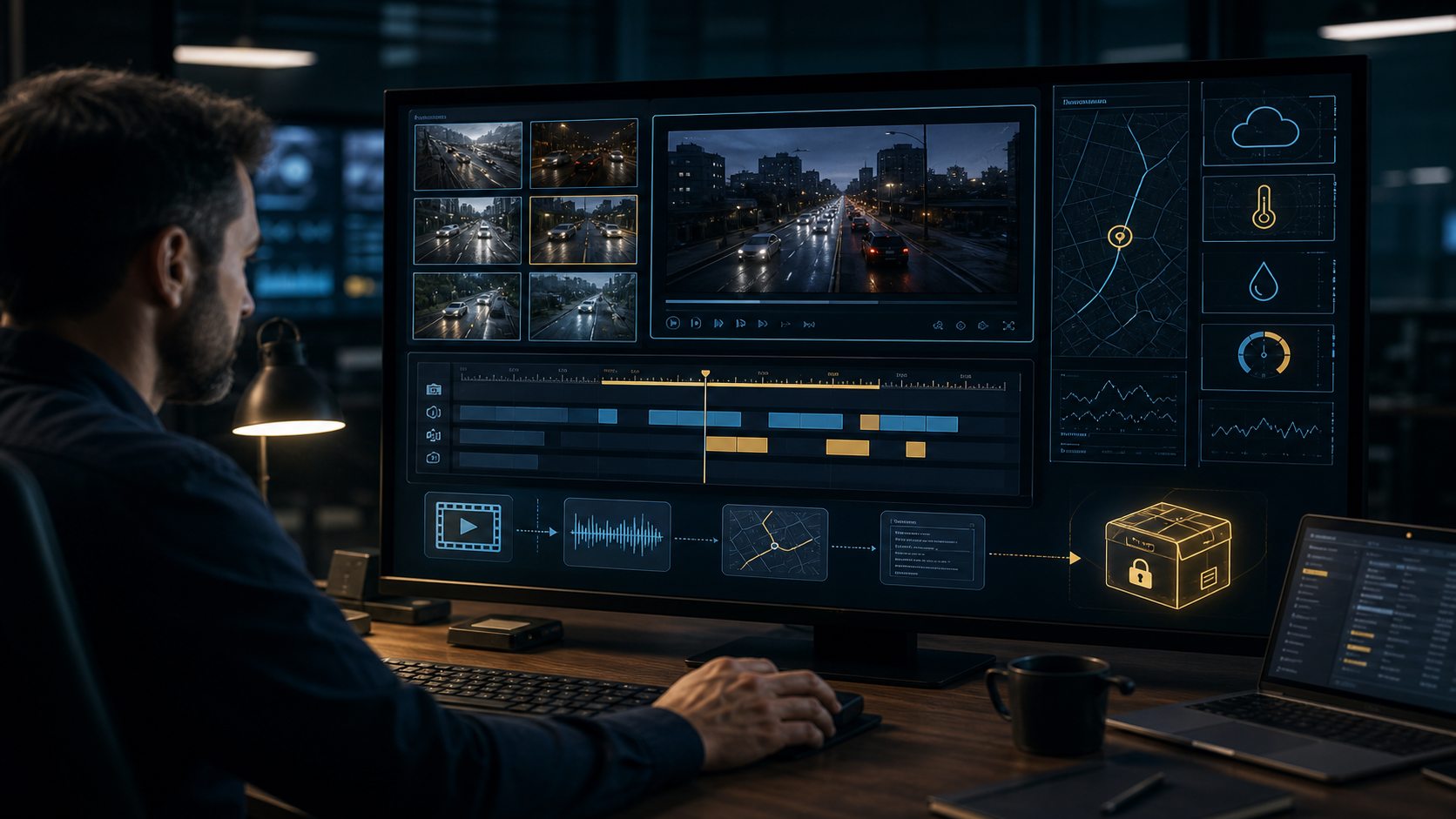
The time engine
Continuum, the SurveillX edge engine, turns fragmented camera feeds into a synchronized field timeline. Operators move from an alert to the surrounding footage, system health, location, weather, and sensor context without rebuilding the incident by hand.

Live that adapts
Sub-second live video rides next-generation streaming infrastructure built for lossy cellular links, adapting from office LAN down to the weakest connection—so operators always get a usable picture.
Intelligence across the stack
SurveillX can detect locally, learn activity patterns, search meaning and appearance, compare over time, and orchestrate fleet operations through governed tools.
MCP-native operations
SurveillX exposes cameras, recordings, health, sensors, tasks, and safe operational controls to compatible AI assistants through Model Context Protocol.
Fifteen-minute activity windows, hour-of-week baselines, anomaly scoring, scheduled rules, and scene-novelty selection surface the moments that differ from normal.
Hybrid retrieval combines activity summaries, event context, captions, and native image similarity across authorized sites, cameras, and time windows.
Ask routes questions to quantitative analysis or evidence retrieval, then returns confidence, cited image, event, and summary identifiers, plus uncertainty.
Daily, weekly, and custom reports combine metrics, site context, selected visual progress, events, and camera coverage.
Field context
Hardware-dependent integrations are enabled per deployment and validated against the site’s equipment.
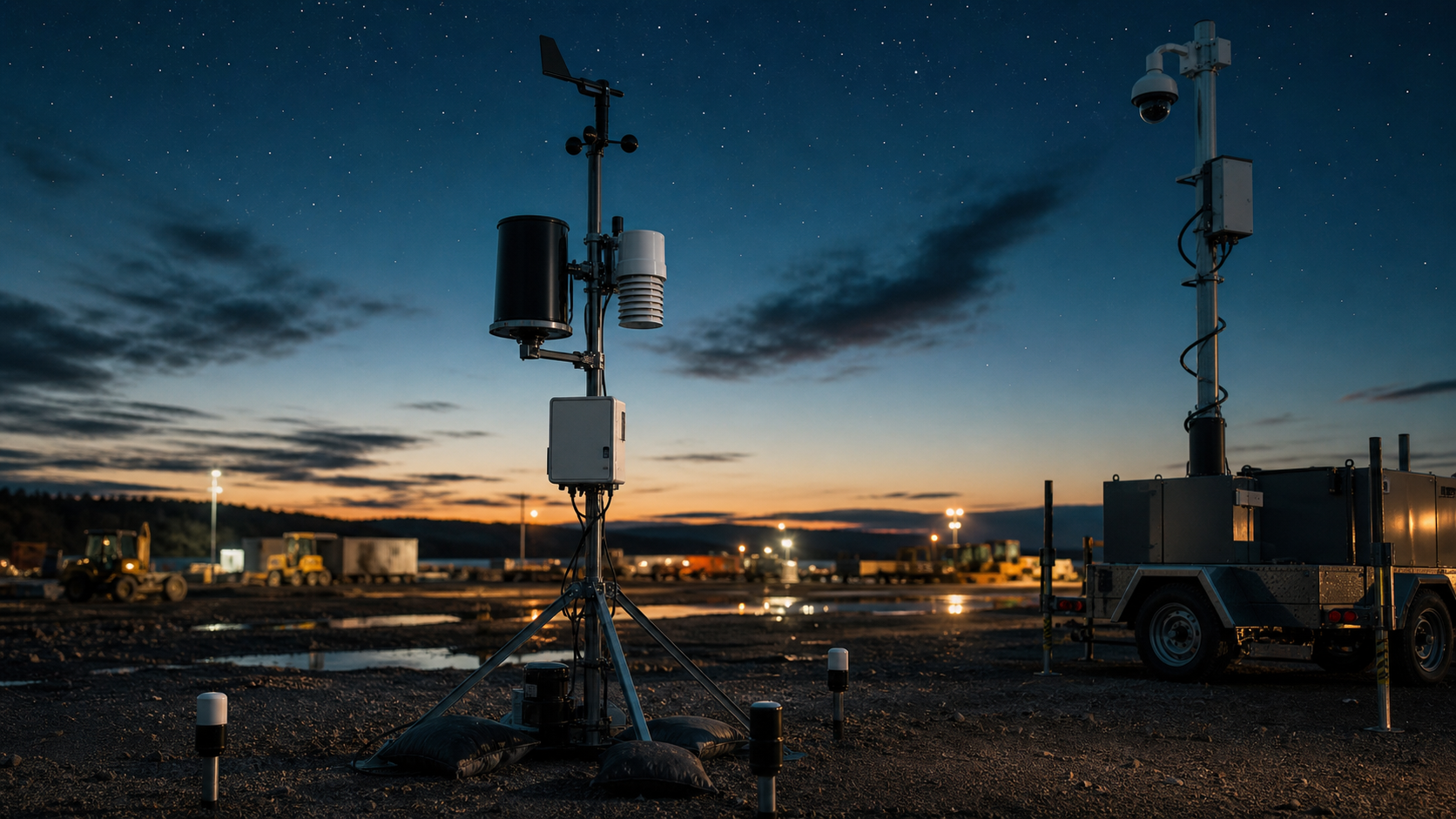
On-node LoRaWAN, direct-wired weather stations, and edge-triggered threshold alerts—gate contacts, tank levels, temperature, and more on the same record as the cameras.
Multi-source location, speed, course, and five-phase light classification connect every segment to where—and under what light—it was recorded.
Victron battery state, voltage, current, solar input, and load telemetry help teams see degradation before an off-grid site goes dark.
Carrier, signal strength, band, and tower context for every site—so you know whether it's the camera or the connection.
Conditionally enabled GPIO inputs and outputs connect contacts, relays, lights, sirens, and other site hardware to the same operational layer.
From scene to decision
SurveillX keeps the raw evidence and the operational context close enough to interrogate together.
IP, CSI, or USB camera inputs at the edge.
Detections, site patterns, and configured rules.
Alerts, anomalies, novelty, and baselines.
Search, measure, verify, and report.
People, automations, agents, and integrations.
Built for difficult places
Connect timelapse, after-hours events, environmental conditions, and remote system health without relying on a finished network.
Edge evidence, intrusion context, and fleet health for remote infrastructure.
Review remote access, restricted zones, weather, power, and system state together.
See site conditions and edge-node health before dispatching a field technician.
“Cloud is part of the workflow. The operational truth still lives at the edge.”
See it on a real site
We’ll map the cameras, links, sensors, retention, integrations, and operator workflow required for a credible deployment.