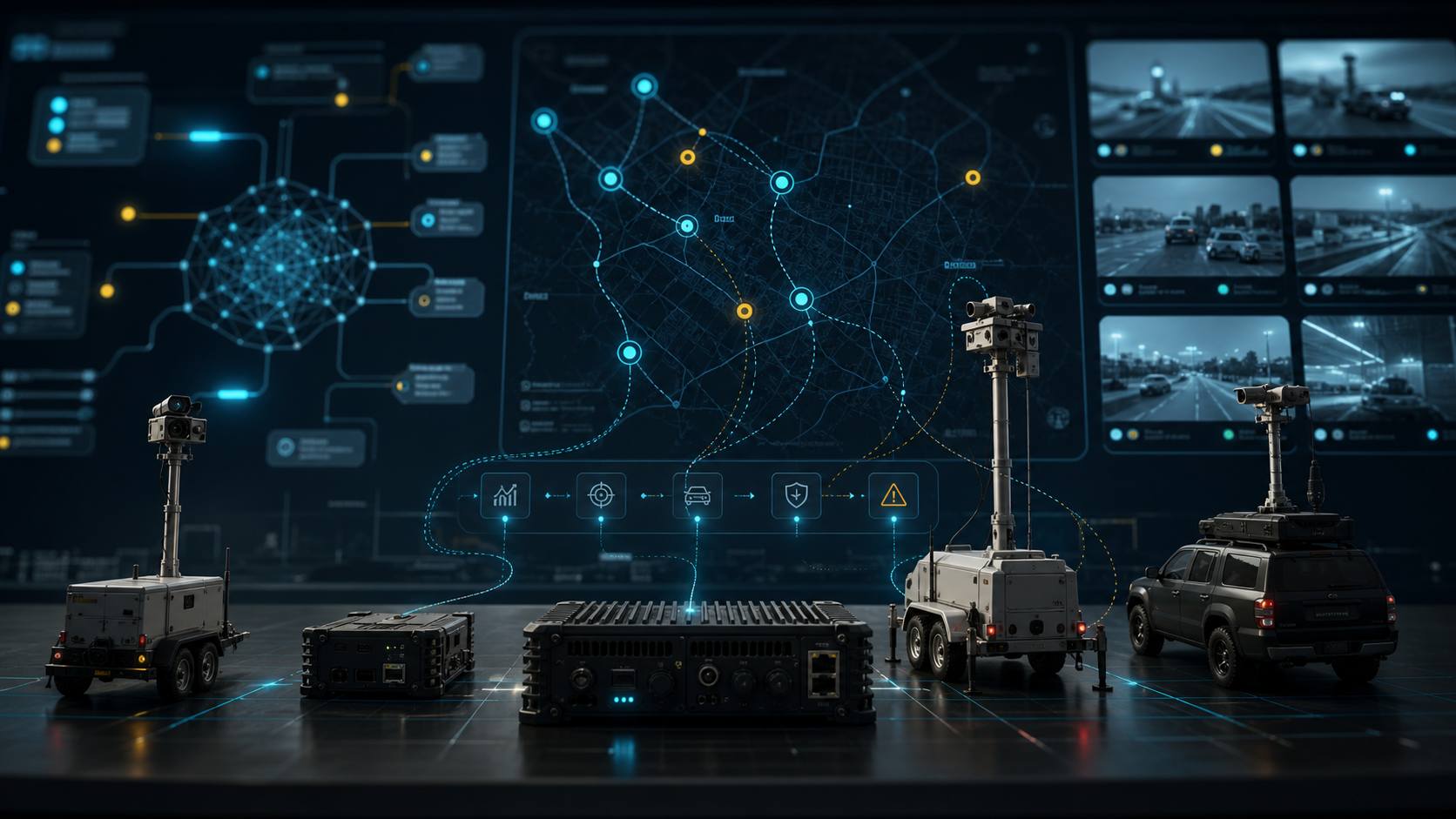
Understand the rhythm.
Activity is accumulated into time windows and compared with learned hour-of-week baselines, so unusual volume and duty cycle can surface after the model has enough history.

SurveillX intelligence
SurveillX learns site rhythms at the edge, selects the moments that carry information, and turns them into searchable, cited operational evidence—without pretending that a sampled frame knows more than it does.
A higher-signal operating record
The intelligence path combines deployed Panoptic services with Cognia on sites configured for extended edge analytics.
Activity is accumulated into time windows and compared with learned hour-of-week baselines, so unusual volume and duty cycle can surface after the model has enough history.
Alerts, anomalies, visual novelty, and periodic baselines create a compact visual history instead of treating every frame as equally informative.
Panoptic combines caption and summary meaning with native image embeddings to find relevant events, activity windows, and visual evidence.
Structured answers return supporting summary, image, and event identifiers, confidence, and uncertainty—not just fluent text.
Quantitative analysis calculates peaks, averages, active windows, and per-class patterns directly from stored activity data.
Daily, weekly, and arbitrary-window reports combine activity metrics, selected evidence, events, coverage, and configured site context.
Intelligence architecture
Raw video remains part of the evidence path. Intelligence records point operators toward the right time, camera, event, and frame.
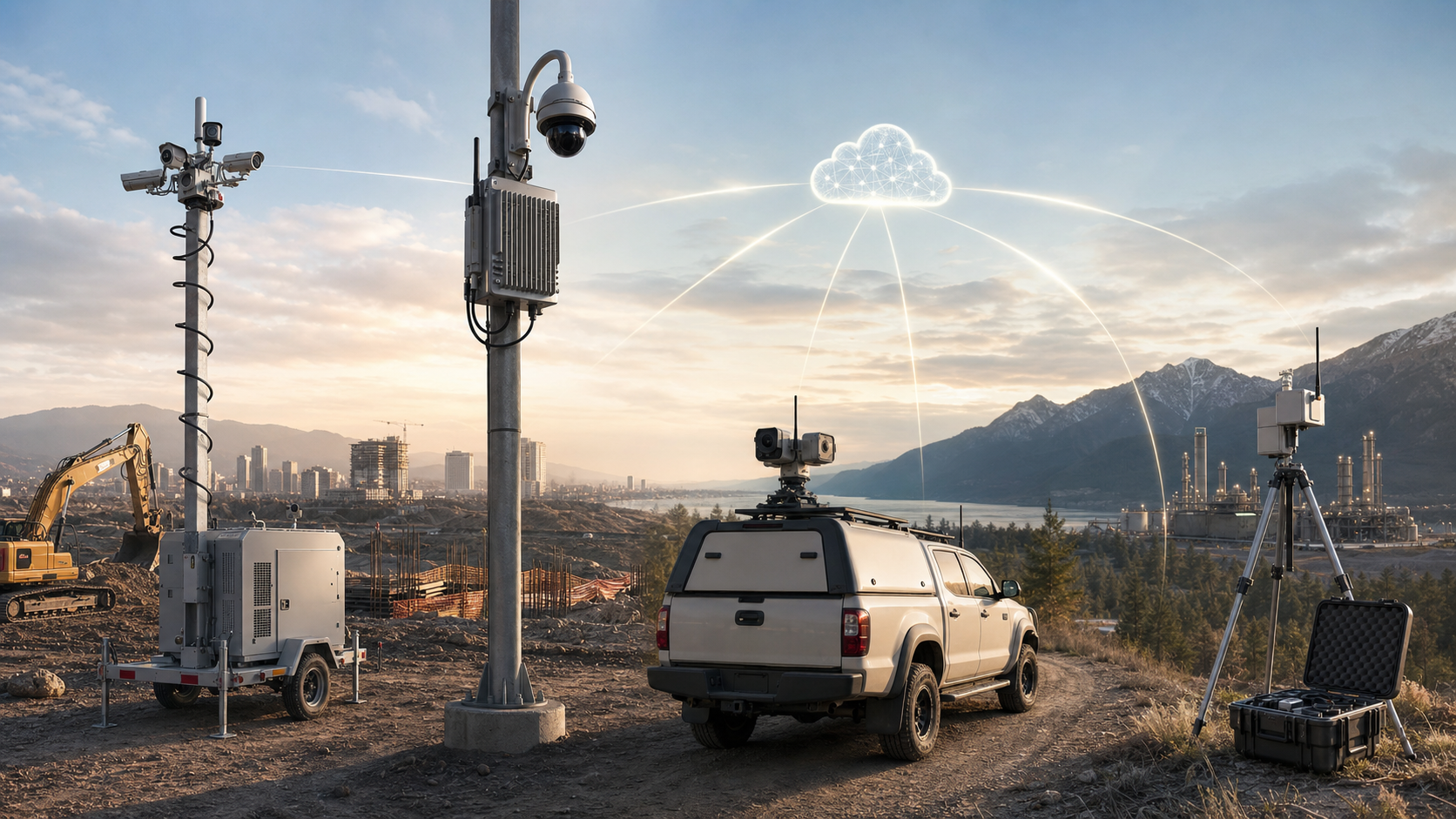
Cognia edge intelligence
On configured sites, Cognia turns continuous detections into activity windows, evaluates scheduled rules, learns weekly operating patterns, and selects high-signal images for the connected intelligence record.
Separate deployment · model profile confirmed per site
Panoptic search + Ask
Authorized operators can search within customer, site, camera, time, trigger, and event boundaries.
Evidence-grounded inquiry
Panoptic can choose quantitative analysis, evidence Q&A, activity intensity, visual progress, or an on-demand source frame. The response preserves provenance and can decline or reframe a question when the record cannot support it.
Operational analysis
Activity metrics come from structured windows. Visual descriptions come from selected images. Coverage states tell the operator how complete that view was.

Grounded reporting
Daily, weekly, and custom-window reports can be configured around cameras, detection classes, operating hours, content sections, local display time, and the narrative appropriate to the site. On sensor-equipped sites, recorded weather and sensor state sit beside the footage as reviewable context for what the report describes.
Claim boundaries
No. Cognia is a separately deployed edge analytics stack. Camera support, rules, model profile, compute capacity, schedules, and event policies are confirmed for the target site.
No. Panoptic creates a searchable intelligence record from activity windows and selected evidence. Continuum remains the source archive, and operators can return to nearby footage or request a source frame when needed.
No. A sampled frame supports what was visible at that moment. Activity windows support measured detection activity, while coverage data states whether the camera observed the full period. The system keeps those evidence types distinct.
No. Safety and PPE models are not presented as validated compliance guarantees. Any such use requires separate model validation, operating procedures, human review, and contractual scope.
Bring a real question
Choose a site question, reporting window, camera set, and evidence standard. We’ll show which answer path is current, which requires Cognia, and where the system should say it does not know.